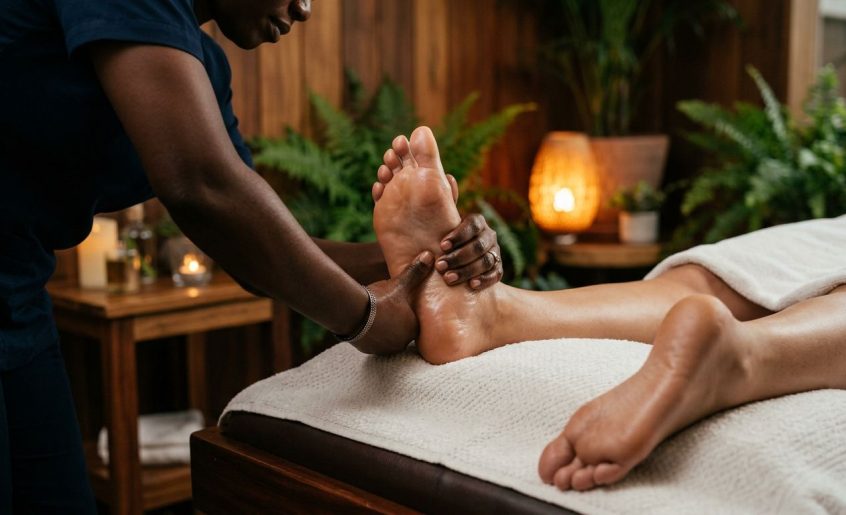
After a long day in Kilimani, a foot massage can help tired feet feel lighter and more comfortable. Steady pressure may relax tight muscles, reduce the feeling of stress, and create a useful pause before sleep.
You can massage your feet at home, use a simple foot massager, or book a professional session in Nairobi. The right method depends on your comfort, health history, and the reason your feet hurt. Start with the benefits, then follow a gentle routine that never causes sharp pain.
Key Takeaways
- Foot massage may support relaxation and ease temporary muscle tension.
- A safe self-massage takes about 5 to 10 minutes per foot.
- Use gentle pressure around the sole, heel, arch, and toes.
- Avoid massage over wounds, infection, acute injuries, or suspected blood clots.
- Persistent foot pain needs medical assessment, not massage alone.
What a Foot Massage Can and Cannot Do
Massage works through touch, pressure, and movement across soft tissue. On the feet, these actions can help you notice and release areas that feel tight after standing, walking, exercise, or wearing uncomfortable shoes.
The clearest benefit for many people is relaxation. A slow session may help settle the nervous system and make it easier to shift out of work mode. Some people also report less perceived foot discomfort and improved comfort before bed.
Research on reflexology and foot-based massage continues to develop. A review of foot reflexology research found possible effects on anxiety and fatigue, but it also shows that more consistent research is needed. A massage can support comfort, yet it shouldn’t be presented as a cure for diabetes, nerve damage, arthritis, circulation disorders, or other medical conditions.
General guidance on foot massage health benefits also focuses on stress relief and short-term comfort. Claims about treating disease or removing toxins go beyond what the evidence supports.
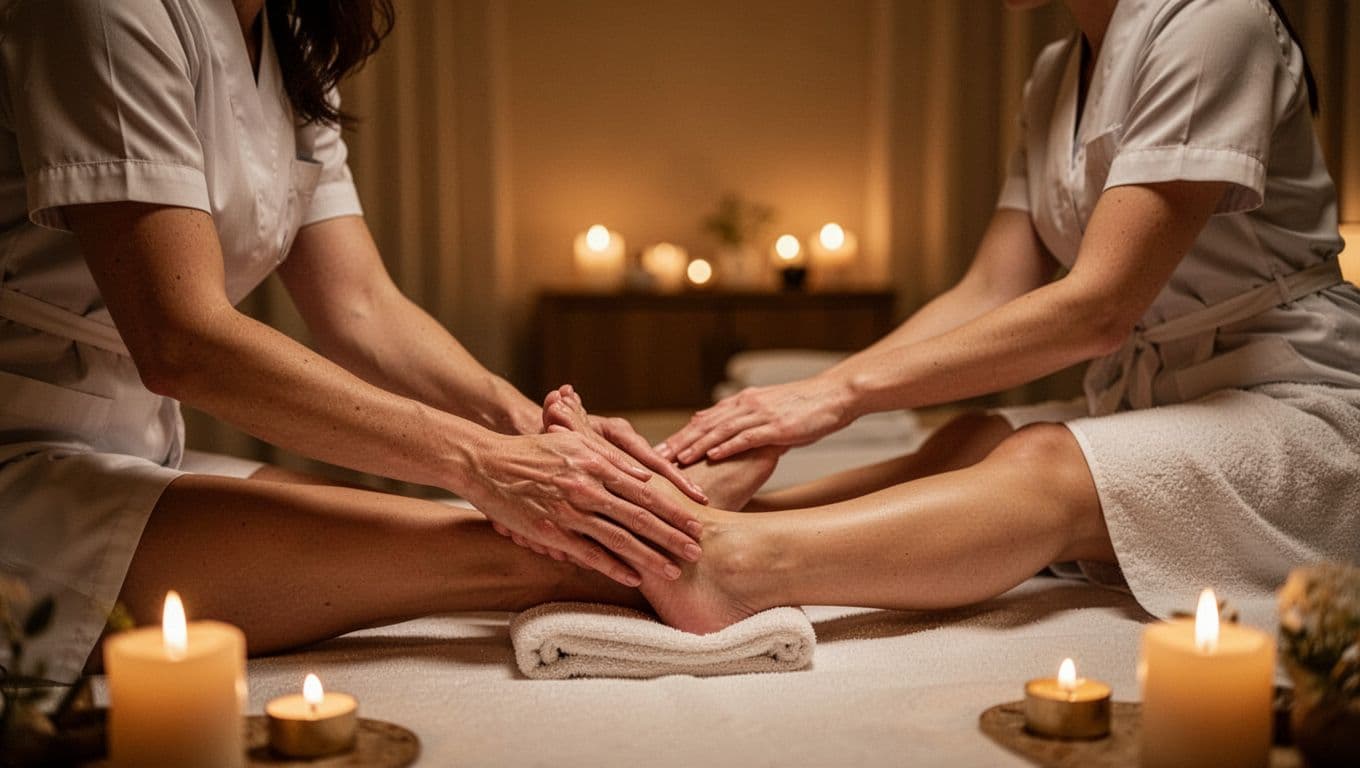
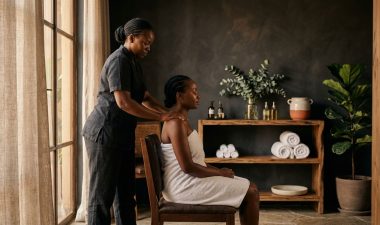
A professional session can also help you relax when you don’t want to manage the pressure yourself. At Nuru VIP Massage, you can review professional massage services and ask which treatment suits your feet and overall comfort.
A Safe Self-Massage Routine at Home
Choose a comfortable chair and support one ankle on the opposite thigh. Keep your back relaxed, and place a towel beneath your foot if you use oil or lotion. A small amount of unscented moisturizer reduces friction without making the skin slippery.
Follow these steps:
- Check your feet first. Look for blisters, cuts, swelling, bruising, redness, or skin breaks. Don’t massage an area that looks infected or injured.
- Warm the foot. Rub both hands together, then glide them over the top and bottom of the foot for about 30 seconds. Use light pressure around the ankle.
- Work across the sole. Use your thumb to make slow lines from the heel toward the toes. Keep the pressure comfortable. Move across the sole rather than pressing one painful point repeatedly.
- Release the arch gently. Place your thumb near the heel and move toward the ball of the foot. The arch may feel sensitive, so reduce pressure if you notice burning, tingling, or sharp pain.
- Massage the heel and ball. Use small circles around the heel pad and the wider area beneath the toes. Avoid pressing directly on joints or hard bone.
- Move each toe carefully. Stroke along each toe and make a small, comfortable bend. Never pull or twist forcefully.
- Finish with broad strokes. Wrap both hands around the foot and glide from the toes toward the ankle. Take a few slow breaths before standing.
Spend five to ten minutes on each foot. Pressure should feel soothing or mildly firm, not painful. Stop if numbness, pins and needles, cramping, dizziness, or increased pain appears.
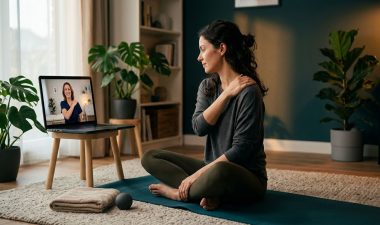
If you watch a Massage video to learn techniques, choose one presented by a qualified massage therapist, physiotherapist, or healthcare organization. A video can show hand placement, but it can’t assess your injury or medical risk.
Techniques and Tools That Make the Session Easier
Hands provide the best control because you can change pressure immediately. Use broad palm strokes for relaxation and smaller thumb circles for tight soft tissue. Avoid digging into the sole with a knuckle or fingertip. Stronger pressure doesn’t automatically create better results.
A tennis ball or firm massage ball can help with the sole. Place it under the foot while seated, then roll slowly for 30 to 60 seconds. Keep most of your weight in the chair. Standing on the ball creates more pressure and may irritate an already tender area.
A Foot Massager can provide rolling, vibration, or heat. Read the instructions, begin with the lowest setting, and limit the first session to a few minutes. Heat may feel pleasant, but people with reduced sensation can miss a burn. Check the skin during and after use.
A Massage Gun needs extra care. Keep it on a low setting, use it over soft muscle, and avoid the toes, ankle bones, the front of the ankle, and any painful or swollen spot. Don’t use it over an open wound or suspected injury.
A Massage Chair can be useful for general relaxation, but it won’t replace a therapist who can focus on a specific foot problem. Retailers such as Massage Warehouse offer massage equipment, yet the most expensive tool isn’t always the most suitable one.
Choosing the Right Massage Service in Kilimani
Searches such as Massage Near me, Massage Spa Near me, or Foot Massage Near me can bring up many options. Look beyond the first listing. Check whether the business provides a clear service menu, location, contact details, hygiene information, and an easy way to reserve an appointment.
People often search Massage Places Near Me, Massage Therapy Near me, Massage Near Me Current Location, or Massage Near Me Open Now when they need a same-day booking. Opening hours matter, but they shouldn’t outweigh basic safety and professionalism.
For a relaxing session, Swedish Massage uses flowing strokes and lighter pressure. You can read about Swedish massage therapy when you want a broader treatment that includes the legs and whole body. A Deep Tissue Massage may suit muscular tension, but firm pressure around a sore foot isn’t appropriate without careful assessment.
A Full Body Massage or general Body Massage can include the feet as part of a longer appointment. Thai Massage uses assisted stretching and pressure, while Asian Massage describes a broad range of traditions rather than one standard technique. Ask what the session includes before booking.
Specialized treatments need a clear reason. Lymphatic Massage and Lymphatic Drainage Massage use gentle, specific techniques and shouldn’t be treated as ordinary foot rubbing for unexplained swelling.
Search results may mix local listings with brands such as Massage Envy, Elements Massage, Massage heights, and Hand and Stone Massage. Those names don’t confirm that a service is available in Nairobi. Similarly, phrases such as Massage Spa nairobi, massage Nairobi, Nairobi Massage Near me, and Nairobi Massage Center can lead to different businesses, so confirm the exact address.
Be careful with vague Nairobi Massage ads, unverified Nairobi Massage spa telegram groups, and listings labelled Nairobi Massage ladies when the treatment details are unclear. A professional listing should state the service, price or booking process, boundaries, and location. The same applies to searches for Massage Parlour Near Me, Nairobi Massage parlour, and Nairobi Massage Parlors. Even an incomplete search such as Nairobi Mas can produce unrelated results, so review the actual business information before sharing personal details or paying a deposit.
When to Avoid Massage or Seek Medical Advice
Don’t massage a foot with an open wound, active skin infection, severe bruising, a recent fracture, or a fresh sprain. Wait until a healthcare professional says hands-on pressure is safe.
Sudden swelling in one leg, warmth, redness, or calf pain needs prompt medical advice. Don’t massage the area if you suspect a blood clot. Seek urgent care if these symptoms occur with chest pain or shortness of breath.
People with diabetes, reduced sensation, poor circulation, varicose veins, bleeding disorders, or medicines that affect clotting should ask a clinician before using firm pressure or heat. Reduced sensation can make it harder to notice skin damage.
Pregnancy, recent surgery, nerve symptoms, and unexplained recurring pain also deserve professional guidance. A Massage Therapist can adjust pressure, but they shouldn’t diagnose a condition. A healthcare professional should assess pain that lasts, worsens, causes weakness, or interferes with walking.
The safest session is one where you can communicate easily. Tell the therapist about injuries, allergies, health conditions, and areas you don’t want touched. Ask them to reduce pressure whenever something feels uncomfortable.
Conclusion
A foot massage can be a practical way to relax after a busy Nairobi day and ease temporary muscle tension. Use slow strokes, moderate pressure, and short sessions, whether you work with your hands or choose a professional treatment.
The strongest benefit is improved comfort, not a medical cure. If your feet are swollen, numb, injured, infected, or persistently painful, arrange a healthcare assessment before booking massage. For ordinary tiredness, a gentle routine or carefully chosen Kilimani spa session may give your feet the rest they need.