
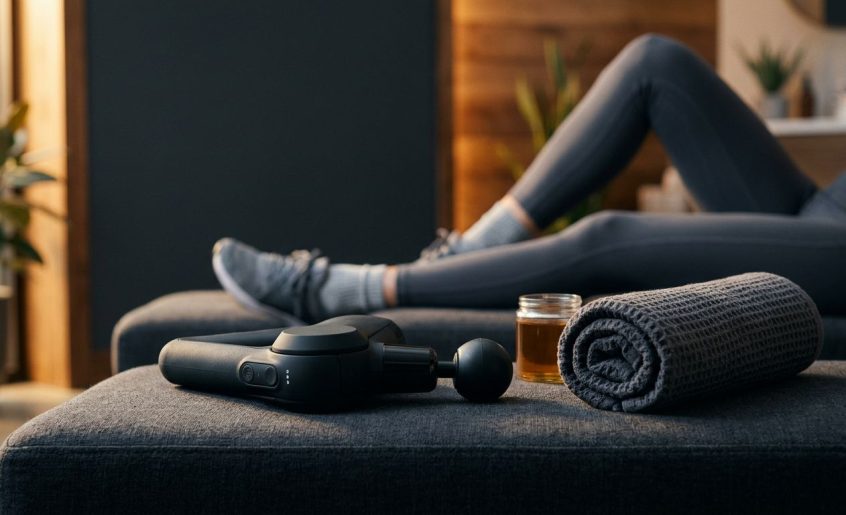
Sore shoulders after work or tight calves after a long day in Kilimani can make a massage gun seem like an easy answer. The handheld device delivers quick pulses into muscle tissue, which may provide short-term relief and help you move more comfortably.
However, a massage gun isn’t a diagnosis or a replacement for medical care. Used with light pressure and sensible timing, it can complement rest, stretching, exercise, or professional bodywork and massage therapy. The results depend on where, how, and why you use it.
Key Takeaways
- A massage gun may temporarily reduce soreness, muscle tension, and stiffness.
- Use low pressure, keep the device moving, and limit each muscle area to about two minutes.
- Avoid the neck, spine, bones, joints, groin, open wounds, and recently injured tissue.
- People with blood clots, bleeding risks, osteoporosis, pregnancy, neuropathy, or implants should ask a clinician first.
- Choose comfort, control, warranty, and practical attachments over the most powerful motor.
How a massage gun affects tight muscles
A massage gun uses percussive therapy, which means a motor moves an attachment rapidly against the body. The repeated pressure stimulates soft tissue and may temporarily change how soreness and tightness feel. The sensation is more focused than a Massage Chair and easier to direct than a general-purpose Foot Massager.
Research supports short-term improvements in flexibility and range of motion. Some people also report less post-exercise soreness and a greater sense of recovery. The University of Utah Health safety guide describes possible benefits such as muscle tension relief and improved circulation.
Still, the device has limits. A review published in Sports Medicine found support for short-term mobility and recovery-related effects, but not strong evidence that percussion improves speed, power, endurance, or explosive performance. A loosened muscle may feel ready to move, yet that feeling doesn’t prove an injury has healed.
The WebMD explanation of massage guns also presents them as tools for soreness and recovery rather than medical treatment. Persistent pain, weakness, swelling, numbness, or loss of movement needs assessment by a qualified clinician.
For general tightness, use the device on large muscle groups such as the quadriceps, hamstrings, glutes, and calves. Avoid treating pain that feels sharp, electric, unstable, or connected to a recent accident.
How to use a massage gun without overdoing it
A massage gun should feel firm and tolerable, not punishing. Let the attachment glide over the muscle instead of pressing it into one point. Start with the lowest speed, then increase only if the tissue feels comfortable.
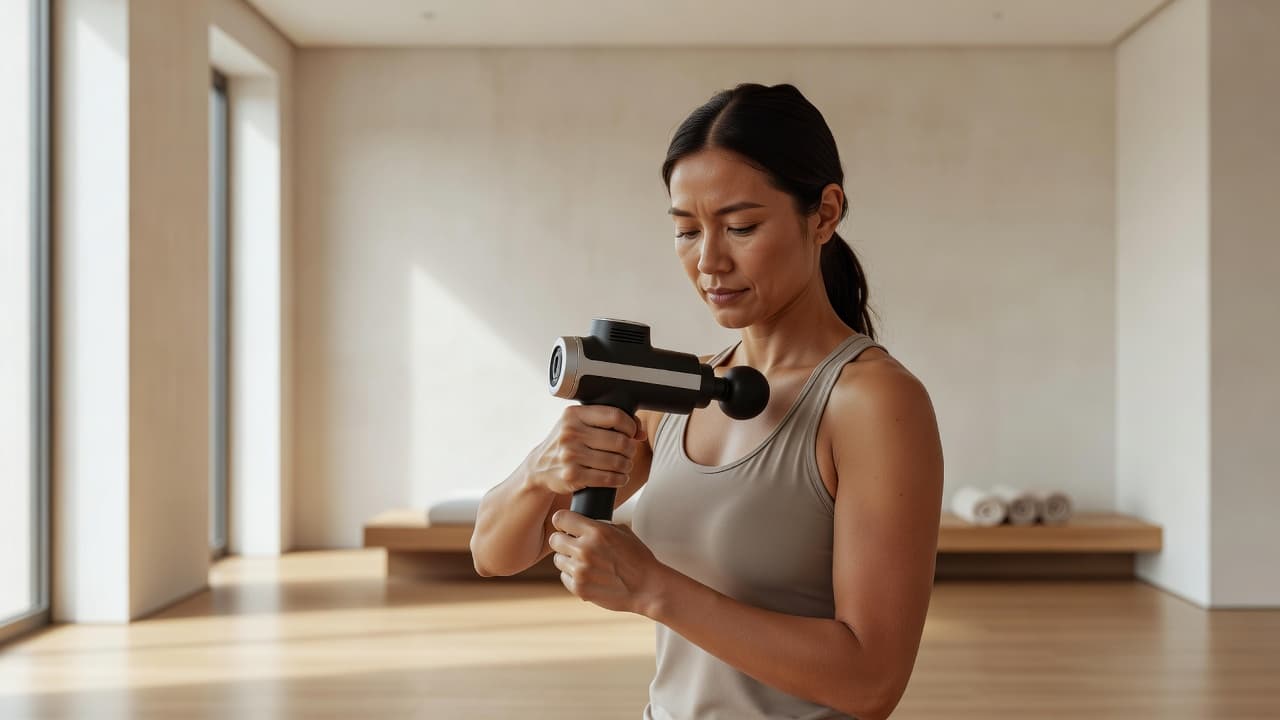
A simple routine looks like this:
- Warm up the area. Walk for a few minutes or move the joint gently before treatment.
- Sweep over the muscle. Spend about 30 seconds on a broad section before focusing on a tight spot.
- Keep the device moving. Limit one muscle group to roughly 60 to 120 seconds, and avoid exceeding two to three minutes.
- Stop when symptoms worsen. Pain, bruising, tingling, numbness, or lingering tenderness means the pressure or location isn’t suitable.
Hold the device perpendicular to the muscle when possible. This position spreads the force more evenly. For hard-to-reach areas such as the middle back, ask someone trained to help rather than twisting into an unsafe position.
Before exercise, light use may help with temporary range of motion. After exercise, gentle treatment can make sore muscles feel more comfortable. It doesn’t replace hydration, sleep, adequate food, gradual training, or rehabilitation.
A Massage video can show basic movement patterns, but it cannot identify a tendon injury, nerve problem, or blood clot. If you’re uncertain about an area, ask a Massage Therapist or physiotherapist before using percussion there.
Features worth comparing before you buy
Price alone doesn’t tell you whether a device will suit your body. Compare the controls, comfort, and support that affect regular use.
| Feature | What to look for | Why it matters |
|---|---|---|
| Speed control | Several low-to-high settings | Sensitive areas need less force |
| Attachments | Soft, standard, and focused heads | Different muscles tolerate different contact |
| Battery | A reliable charge and clear indicator | Prevents interruptions during use |
| Handle design | Easy grip and manageable weight | Reduces wrist and shoulder strain |
| Noise | A motor quiet enough for home use | Makes longer sessions less irritating |
| Warranty | Clear repair or replacement terms | Protects an expensive purchase |
Amplitude describes how far the attachment travels, while stall force describes how much pressure the motor can tolerate before slowing. These specifications can help compare models, but a higher number isn’t automatically better. A powerful device can cause soreness when used by someone who needs light contact.
For home use, adjustable speed matters more than maximum intensity. A soft attachment may suit relaxed calves, while a broader head can cover the thigh efficiently. Avoid choosing a model based only on a dramatic demonstration or a claim that it reaches every deep layer of tissue.
The Consumer Reports buying guide recommends paying attention to usability and safety before purchase. Check whether you can hold the device comfortably, reach the areas you plan to treat, and return it if the grip or noise doesn’t work for you.
When a massage gun is the wrong choice
Never use percussion over the front of the neck, spine, chest, ribs, shins, or directly on a joint. The groin, armpits, and area behind the knee also contain important blood vessels and nerves that need protection.
Avoid skin that has an open cut, rash, infection, sunburn, blister, fresh bruise, or healing wound. Don’t use the device over a suspected fracture, acute sprain, torn muscle, inflamed tendon, or fresh surgical site. More pressure can increase tissue irritation instead of improving it.
Speak with a qualified clinician before using one if you have:
- A history or suspicion of deep vein thrombosis
- A bleeding disorder or use blood-thinning medicine
- Osteoporosis, low bone density, or a stress fracture
- Pregnancy
- Advanced diabetes or reduced sensation from neuropathy
- A pacemaker, arterial stent, surgical hardware, or another implant
- Cancer, recent surgery, kidney disease, or previous rhabdomyolysis
People with fibromyalgia or chronic pain conditions may also react poorly to deep pressure. A clinician can help you decide whether light percussion is appropriate and which areas to avoid. The Mayo Clinic guide to massage gun precautions provides additional guidance on possible benefits and safety concerns.
Stop using the device if pain continues after the session, bruising appears, or you notice weakness, numbness, swelling, dark urine, or unusual fatigue. Those symptoms need medical attention, especially after vigorous treatment.
Choosing between home percussion and massage in Kilimani
A massage gun works well when you want brief, targeted relief at home. Professional Massage Therapy may suit you better when tension covers several areas, you cannot reach the painful spot, or you want a trained person to adjust pressure during the session.
A Swedish Massage session in Nairobi uses flowing strokes and hands-on pressure, which can feel more relaxing than a motorized device. Deep Tissue Massage may address persistent muscular tightness, while a Full Body Massage gives a therapist more time to assess how different areas connect. A Foot Massage can also be a better choice after hours of standing or walking.
In Kilimani, people search for “Massage Near me”, “Massage Spa Near me”, “Massage Near Me Current Location”, and “Massage Near Me Open Now” when they need a convenient appointment. Searches such as “Massage Spa nairobi”, “massage Nairobi”, “Nairobi Massage Near me”, “Nairobi Massage Center”, and “Nairobi Massage Therapist” narrow the search to local providers.
Check the setting, treatment description, therapist communication, hygiene, privacy, and booking process before you reserve. Terms such as “Nairobi Massage ladies”, “Nairobi Massage parlour”, “Nairobi Massage Parlors”, “Massage Parlour Near Me”, and “Massage Places Near Me” can lead to very different services, so read the details rather than relying on a short listing. The same applies to “Nairobi Massage spa telegram”, “Nairobi Massage ads”, and even a partial search such as “Nairobi Mas”.
You may also see searches for Asian Massage, Thai Massage, Massage Envy, Massage heights, Elements Massage, Hand and Stone Massage, or Massage Warehouse. These names and categories may describe overseas chains, equipment sellers, or different treatment styles. They don’t tell you whether a specific Kilimani provider is suitable for your needs.
Someone looking for a Massage Chair or Foot Massager may want passive home comfort. Someone with an active injury needs assessment first. Matching the tool to the problem is more useful than buying the strongest device available.
Conclusion
A massage gun can reduce the feeling of tightness, improve short-term mobility, and make post-exercise soreness easier to manage. Its value comes from controlled, brief use, not maximum force.
Keep it on muscle tissue, avoid risky areas, and stop when symptoms change for the worse. If pain persists or you have a medical condition, choose advice from a qualified clinician or a professional massage session over self-treatment. The right approach leaves your body more comfortable, not more battered.


[…] same applies to product searches for a Massage Gun, Massage Chair, or Foot Massager, as well as broad terms such as Asian Massage. A product page, […]