
Sore legs after a workout, tight shoulders from desk time, or a stiff back after a long day, most of us know that tense, achy feeling. A massage gun is a handheld tool that uses fast pulses to massage your muscles, kind of like quick tapping from a therapist’s hands.
Used the right way, it can help with warm-ups, post-workout recovery, and everyday soreness. It may also help you relax and move a bit easier by easing muscle tension and boosting blood flow. Still, it’s not a cure-all, and it won’t fix an injury or replace a proper massage when you need one.
In this guide, you’ll learn how a massage gun works (and what “percussive therapy” really means), what benefits are realistic, and when to use it before or after activity. You’ll also get simple safety tips, how long to spend on each area, and which spots to avoid.
If you’re shopping for one, we’ll cover what to look for, including speed range, attachments, battery life, and noise level, plus a few common mistakes that can leave you more sore instead of less.
If you want a quick visual on technique and choosing a model, this video is a helpful starting point:
https://www.youtube.com/watch?v=SbV6OzANfik
What a massage gun does and how it works
A massage gun uses percussive therapy, which means it sends quick, repeated taps into your muscles and soft tissue. Think of it like fast drumming on a tight rope. The pulses help increase local blood flow, calm down protective muscle tension, and change how sore a spot feels by nudging your nervous system to ease off.
What it doesn’t do is “repair” a torn muscle or fix the root cause of an injury. It can help a tight area relax so you move better, but if pain is sharp, swelling is present, or you’re dealing with a real strain, you’ll need proper care, not more pressure.
Percussion vs vibration, what the feeling means
These two can feel similar at first, but they act differently on the body.
- Vibration feels like a surface-level buzz. It can be soothing, warms tissue, and often feels gentler on sensitive areas.
- Percussion feels like deeper tapping (up and down hits). It tends to reach deeper muscle layers, which is why many people use it for knots and post-workout soreness.
What you should feel: steady pressure, mild warmth, and sometimes a “good pain” that stays mild and fades as the muscle lets go. What you should not feel: sharp pain, electric tingles, or a dead numb feeling.
A simple rule: if you tense up, numb out, or your pain spikes, it’s too much. Back off on pressure, lower the speed, switch to a softer head, or move to a nearby area.
The key specs that actually matter (amplitude, speed, stall force)
Most product pages throw a lot of numbers at you. These three are the ones that affect how a massage gun feels in real use.
- Amplitude: How far the head travels with each tap. Around 12 to 16 mm is often better if you want a deeper feel on bigger muscles (glutes, quads, back).
- Speed (percussions per minute): How fast it taps. More speeds aren’t always better; you mainly want a low setting for relaxing sore tissue and a higher setting for a quick warm-up.
- Stall force: How well it keeps tapping when you press in. Higher stall force matters if you lean into tight spots because weak models slow down or stop when you need steady power.
Attachments and what each head is best for
Attachments change the “shape” of the pressure, which changes how safe and comfortable it is.
- Ball head: Best for big muscles (quads, hamstrings, glutes, lats). It spreads force and feels forgiving.
- Flat head: Good for general work on dense areas (upper back, hips, thighs). It’s a solid choice when you’re not chasing one tiny knot.
- Bullet head: Best for small trigger points (shoulder knots, forearms, feet). Use light pressure so it doesn’t feel like a bruise.
- Fork head: Great for working alongside structures, like the calves and around the Achilles area. It’s also helpful near the spine because it can sit on either side, not on the bones.
Quick safety note: use it on muscle, not on bone. Avoid joints, the front of the neck, and any bony areas where it feels sharp or rattly. If you’re unsure, stay on big, fleshy muscle groups and keep the pressure light.
Real benefits of using a massage gun (and what it cannot do)
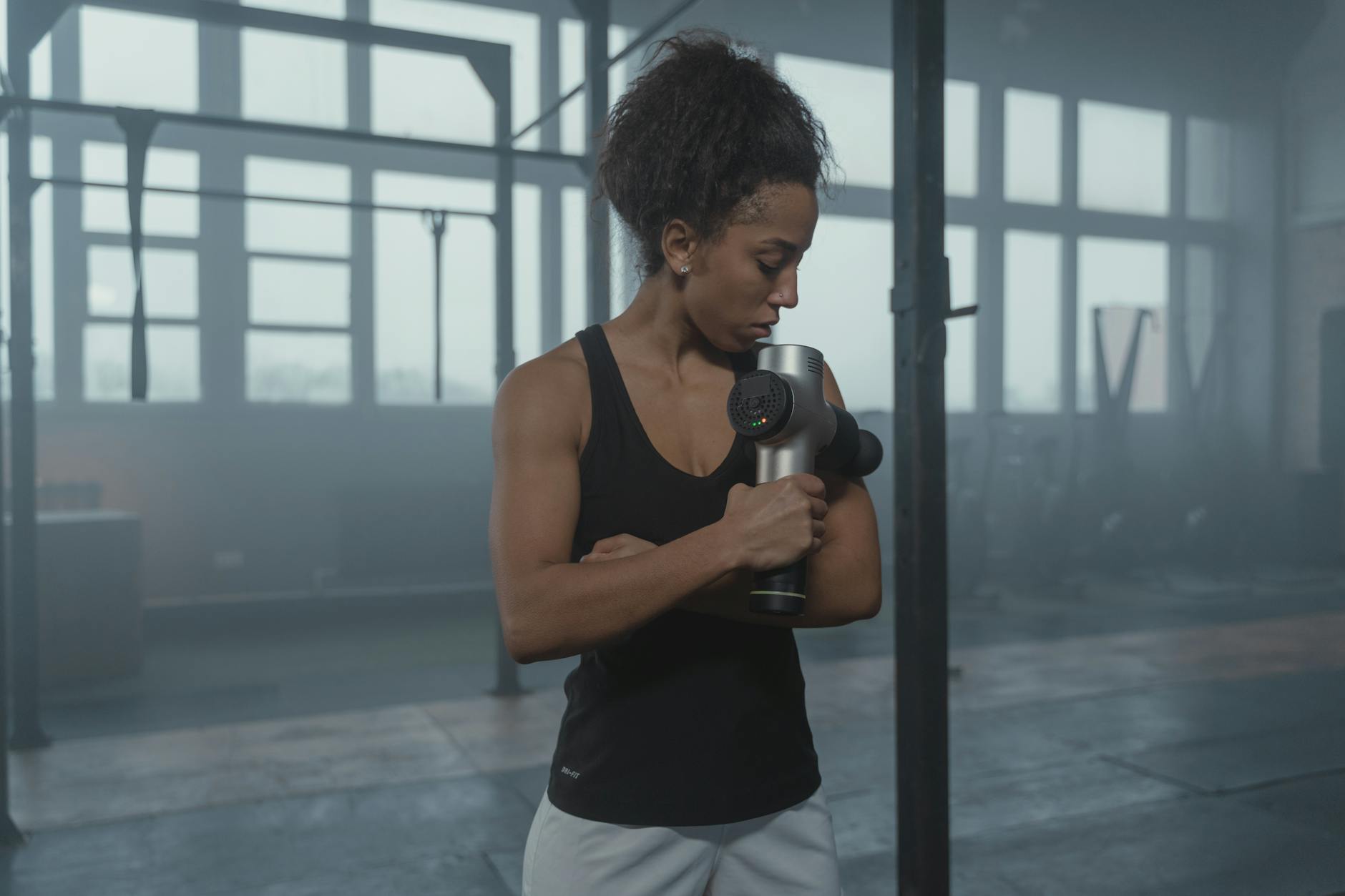
Photo by Tima Miroshnichenko
A massage gun can be a solid tool for daily tightness and post-workout soreness. Think of it like a quick “reset button” for tense muscles. It can help you feel looser, reduce that heavy, stiff feeling, and make warm-ups and recovery more comfortable.
But it’s not magic. A massage gun won’t fix a torn muscle, “break up” lactic acid, or replace rehab. Results also vary, some people feel a big change right away, others need a few sessions to notice much. Consistency matters, and the basics still do the heavy lifting: sleep, food, and hydration.
Better warm-ups, faster cool-downs, and less soreness
Used before training, a massage gun can help you feel ready by warming up the tissue and dialing down that “tight” signal from your nervous system. After training, it can calm things down and reduce stiffness later, which is why many people use it for delayed-onset muscle soreness (DOMS).
Here are simple, real-world examples you can copy:
- Before a run: 30 to 60 seconds on each quad, then do a few easy leg swings.
- After a run: 1 to 2 minutes on each calf, then walk for a couple of minutes.
- After leg day: 60 to 90 seconds on each glute and hamstring, light pressure, slow passes.
Keep the goal realistic. You’re aiming for less stiffness the next day, not zero soreness. If you trained hard, soreness is normal.
One reminder that saves a lot of frustration: even the best massage gun can’t outwork poor recovery. If you’re sleeping 5 hours, skipping protein, and not drinking water, the gun becomes a small helper, not the solution.
Mobility and flexibility, what to expect in the short term
Many people get a short-term boost in range of motion after percussive massage. That can be useful right before lifting, sprinting, yoga, or stretching, because it helps you move with less resistance.
The key phrase is short-term. The “loosened” feeling usually fades if you sit still right after.
A simple way to make it stick a bit longer is to pair it with gentle movement:
- Use the massage gun for 30 to 60 seconds on the target muscle (like hip flexors or calves).
- Do 30 to 60 seconds of easy movement right after, such as bodyweight squats, arm circles, or a light lunge stretch.
- Then start your workout warm-up as normal.
It’s like warming clay before you shape it. The massage gun warms things up, the movement teaches your body to use that new range.
Pain relief vs injury care, knowing the difference
A massage gun can help with everyday aches by lowering pain signals and calming protective muscle tightness. That’s helpful for desk shoulders, a cranky upper back, or legs that feel beat up after training.
What it cannot do is diagnose the problem, put tissue back together, or correct a movement issue that keeps re-injuring you. If you use it to cover up pain and keep pushing hard, you can dig a deeper hole.
Use this quick checkpoint. Stop using the massage gun and get medical advice if:
- Pain is sharp or feels like a stab
- Swelling gets worse
- Bruising spreads
- You cannot use the limb normally (limping, weak grip, limited load)
For normal soreness and tightness, keep pressure light to moderate and stay on muscle. The best sessions feel relieving, not like you’re trying to “beat” the knot into submission.
How to use a massage gun safely (simple routines that work)
A massage gun should feel like a helpful assistant, not a jackhammer. The safest results come from light to medium pressure, short doses, and steady movement. If you use it with patience, you’ll usually stand up feeling looser, not beat up.
A good pace for most people is 3 to 5 days per week, or after hard workouts plus on easy recovery days. You can use it daily if you keep sessions short and your body feels good after.
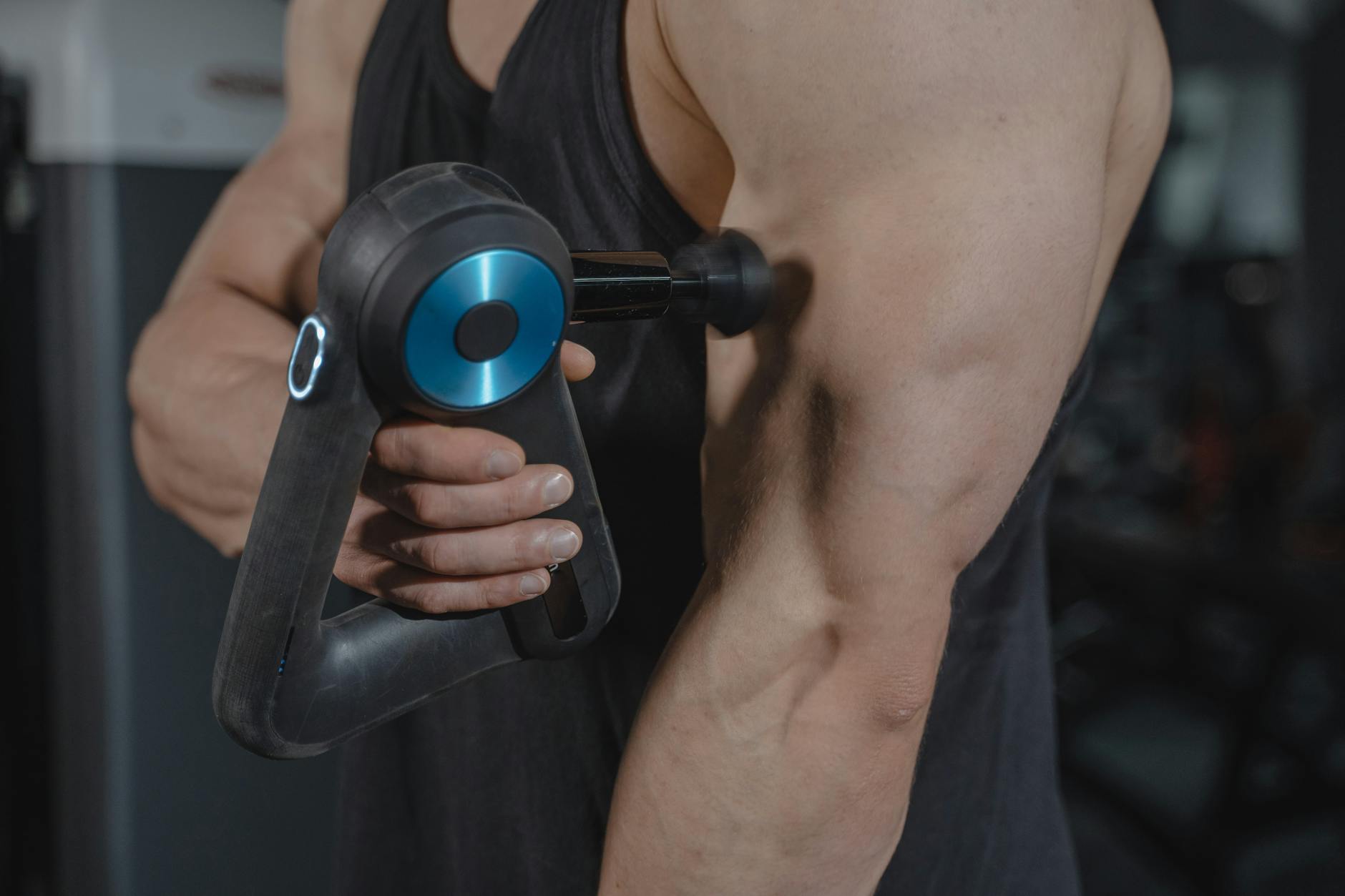
Photo by Tima Miroshnichenko
Best practice basics: time, pressure, and how to move the gun
If you only remember a few rules, make them these. They keep massage gun sessions effective and low-risk.
1) Start low, then earn the intensity
Begin on the lowest speed every time, even if you used it yesterday. After 10 to 15 seconds, increase one level only if the muscle feels calm and warm, not guarded.
2) Use light to medium pressure, let the tool do the work
Hold the gun like you’re holding a TV remote, not a hammer. You’re aiming for a “melting” feeling, not a fight. If you have to brace your body or grit your teeth, you’re pressing too hard.
3) Keep the head moving slowly
Glide at about 1 inch (2 to 3 cm) per second. Think of painting a wall with a small roller, slow and steady so you don’t miss spots. Don’t drag it across dry skin, a thin layer of clothing is fine.
4) Stick to simple timing limits
Use these as your default:
- 15 to 30 seconds per spot (that tight point you can feel)
- 1 to 2 minutes per muscle group (like the whole quad)
- Stop earlier if the area “lets go” quickly
5) Breathe and relax your muscle on purpose
A massage gun works best when your nervous system feels safe. Try this: inhale through your nose, exhale slowly, and let the muscle go soft. If you catch yourself holding your breath, lower the speed and pressure.
6) Know what “good” and “bad” feels like
- Good: mild ache, warmth, easing tightness, discomfort that fades while you stay on the muscle
- Bad: sharp pain, burning, “electric” tingles, numbness, or symptoms that travel down the arm or leg
If any “bad” sign shows up, stop and reassess (lighter pressure, different head, or a different area).
A quick pre-workout routine (5 to 8 minutes)
This routine is meant to wake muscles up, not beat them up. Use a medium to high speed, light pressure, and keep moving. Treat it like turning the lights on in a room.
Total time: 5 to 8 minutes
- Calves (60 seconds total)
Do 30 seconds per calf, working from just above the Achilles up toward the back of the knee. Keep off the Achilles tendon and ankle bones. - Quads (90 seconds total)
About 45 seconds per thigh. Spend a little extra time on the outer quad if it feels tight, but keep the head moving. - Glutes (90 seconds total)
45 seconds per side. Stay on the meaty part of the glute, not on the hip bone. - Upper back and shoulders (60 to 120 seconds total)
30 to 60 seconds per side on the upper traps and the meaty area between shoulder blade and spine (not on the spine itself).
After the gun, do a dynamic warm-up so your body uses the new range:
- 10 bodyweight squats
- 10 walking lunges (each side)
- 10 arm circles (each direction)
- 20-second brisk walk or easy jog
Desk worker add-on (about 2 minutes, light pressure only)
If you sit a lot, tight chest and traps can pull your posture forward.
- Traps (60 seconds total): 30 seconds each side, very light pressure
- Chest (60 seconds total): lightly on the pec muscle (avoid the collarbone and front of the shoulder joint)
Finish with a quick posture reset: stand tall, ribs down, squeeze glutes for 5 seconds, then do 5 slow shoulder blade squeezes.
A recovery day routine for tight legs and back (8 to 12 minutes)
This one is for soreness and stiffness. Choose a low to medium speed, use light to medium pressure, and move slower than you think you need to. The goal is calming, not hype.
Total time: 8 to 12 minutes
- Feet arches (60 seconds total, gentle)
30 seconds per foot using a soft head. Stay on the arch, avoid hard pressure on the heel bone. - Calves (2 minutes total)
1 minute per calf. If you find a tender spot, hover for 15 to 30 seconds, then keep moving. - Hamstrings (2 minutes total)
1 minute per leg. Work from mid-hamstring toward the glute crease. Avoid the back of the knee. - Glutes (2 minutes total)
1 minute per side. This is a great area to spend time on if your back feels tight. - Lower back edges (60 to 90 seconds total)
Work the muscles on either side of the spine, not on the spine. Use light pressure and keep the head moving. - Lats (60 to 90 seconds total)
About 30 to 45 seconds per side, along the side of your back under the armpit area (stay off the ribs if it feels sharp).
Tender but okay vs too painful
- Tender but okay: you can breathe normally, the discomfort stays local, and it eases within 10 to 20 seconds
- Too painful: you tense up, pain shoots or tingles, you feel numb, or you feel sore for hours after
When it’s too painful, back off right away. Drop speed, reduce pressure, switch to a softer head, or choose a nearby muscle instead.
Where not to use a massage gun and who should be careful
A massage gun belongs on muscle and soft tissue, not on places where nerves, vessels, joints, or bones are close to the surface.
No-go zones (skip these):
- Front of neck and throat
- Directly on the spine
- Joints (knees, elbows, ankles, wrists, shoulders)
- Bones (shin, kneecap, collarbone, ribs)
- Bruises, open wounds, rashes, sunburn, or irritated skin
- Varicose veins
- Any area with numbness or altered sensation
Be extra careful, and ask a clinician if unsure, if you have:
- Pregnancy
- You take blood thinners or bruise very easily
- A history of clots (or suspected clot)
- Neuropathy or diabetes-related nerve issues
- Recent surgery or a recent fracture
- Acute strains or sprains (new injury with sharp pain)
- Unexplained swelling or heat in a limb
When in doubt, keep it simple: stay on big muscles, keep the pressure light, and stop if anything feels wrong.
How to choose the best massage gun for your needs in 2025
Buying a massage gun in 2026 is less about chasing the biggest numbers and more about picking a tool you will actually use. The right model should feel comfortable in your hand, easy to control, and strong enough for your body and goals.
Think of it like shoes. A stiff, heavy hiking boot is great on rough trails, but it’s a pain for quick errands. Same idea here: choose the massage gun that fits your routine, not someone else’s.
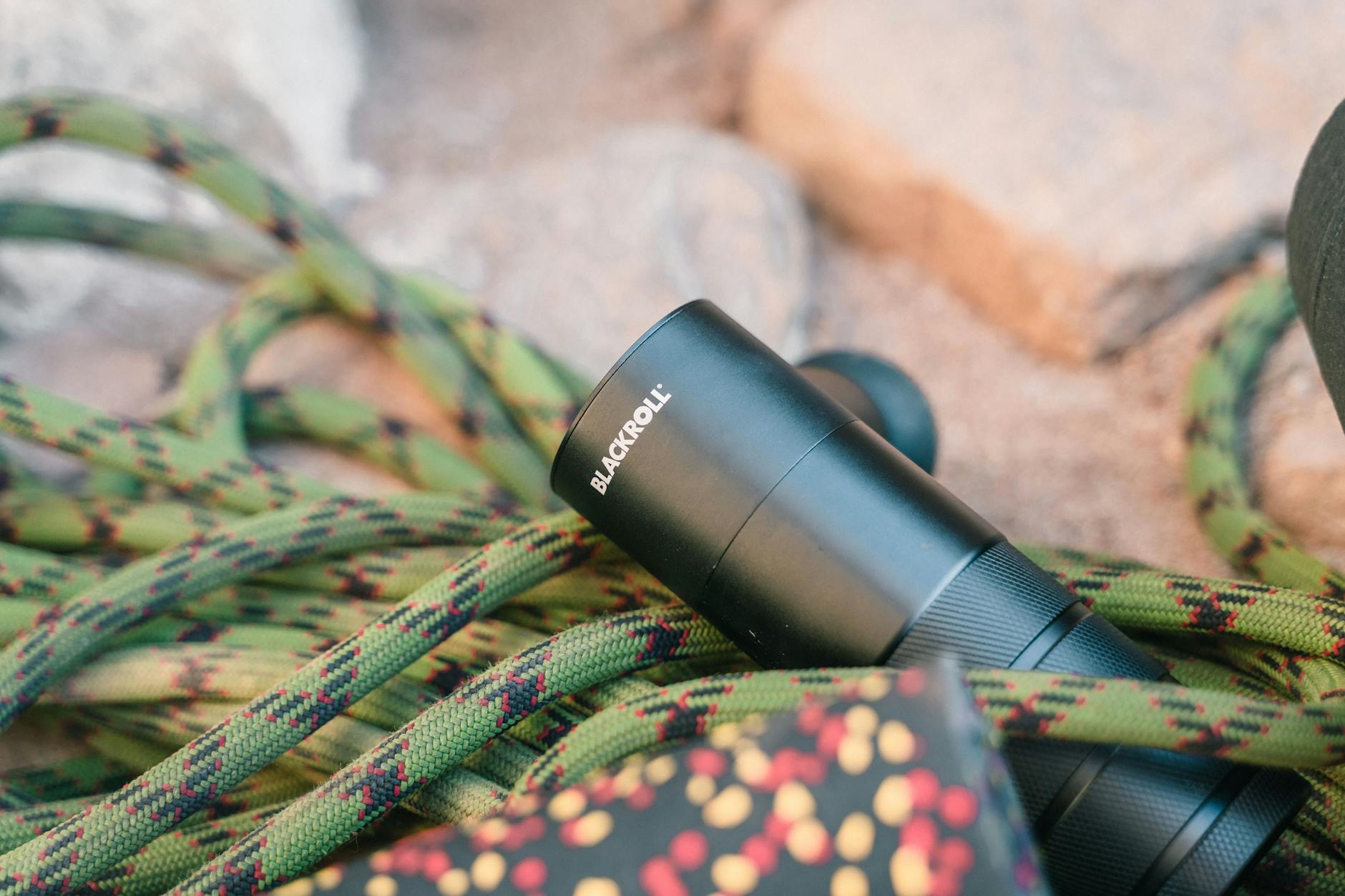
Photo by Liam Moore
Match the massage gun to your goal: recovery, pain relief, travel, or daily stiffness
Use this simple “if this, then that” guide to narrow your options fast:
- If you want deep tissue recovery (heavy training, thick legs, stubborn knots), then look for higher amplitude (often around the mid-teens in mm) and strong stall force so the head keeps hitting when you press in. A stronger motor matters most on glutes, quads, and upper back.
- If you’re using it for daily stiffness (desk shoulders, tight hips), then prioritize comfort and control over raw power. You want a smooth feel, several speed steps, and an attachment set that makes sense (ball and flat are usually enough).
- If you’re sensitive, bruise easily, or just hate harsh vibration, then choose a model known for a quieter, smoother motor, plus more speed control at the low end. A gentle start speed and a soft head can make the difference between “ahh” and “never again.”
- If you travel often, then go lighter and smaller. A compact massage gun is easier to pack and more likely to come with you, even if it hits less deep than a full-size model.
One reality check: comfort and ease of use matter as much as power. A strong massage gun that’s awkward to hold, too loud, or too heavy usually ends up in a drawer.
A quick example: if you can’t reach your upper back without twisting like a pretzel, you will stop using it. In that case, an ergonomic handle beats a stronger motor.
What to look for in quality: build, noise, battery, and easy grip
Two massage guns can look the same online and feel totally different in real life. These are the details that separate “nice tool” from “regret buy.”
Handle shape and grip (reaching matters)
Ergonomics is not a luxury feature. A smart handle shape helps you reach:
- Upper back and traps without straining your wrist
- Hips and glutes without fighting the angle
- Calves and hamstrings while staying relaxed
If you can, hold the device the way you would use it at home. Pay attention to wrist bend and how slippery the grip feels when your hands are sweaty or lotioned.
Noise level (you’ll use it more when it’s quiet)
A loud massage gun sounds minor until it’s the reason you skip recovery at night. Quieter motors make it easier to use while watching TV, sharing a room, or winding down before bed. If you live with others, noise can be the make-or-break factor.
Battery life (what’s realistic)
Real-world battery depends on speed and pressure. In normal use, a good rule is this:
- Expect multiple short sessions across a week without charging.
- If you do long sessions on high speed, battery drops faster than the box suggests.
Also check how it charges. A standard plug and a stable charging setup are less annoying than a proprietary charger you can lose.
Build quality (rattle is a red flag)
A quality massage gun should feel solid, with minimal rattling, and attachments that lock in well. Excess vibration in the handle can make your hand tired fast, and it often hints at weaker build.
Warranty and return window (your safety net)
Even a well-reviewed model might not suit your body. A clear warranty and a reasonable return period give you room to test it properly. If the return policy is vague or restrictive, it’s a risk.
A realistic look at 2025 standouts and what they are known for
Reviews in 2025 show a pretty consistent pattern: people reward massage guns that feel powerful, comfortable, and quiet enough to use often.
Here’s the neutral “what they’re known for” snapshot, without turning this into a shopping list:
- Theragun Prime and Theragun Elite: Often rated highly for power and ergonomics, with a handle design many users find easier for hard-to-reach spots (like the upper back and hips). Prime gets frequent praise as a strong “daily driver” value pick, while Elite is commonly seen as the step-up choice for higher output.
- Hypervolt 2 and Ekrin B37: Commonly cited for quieter use and strong value. Hypervolt 2 shows up a lot in athlete-focused picks, and Ekrin B37 is often mentioned as a quiet option that still feels strong for the price.
- Travel minis (examples include Theragun Mini and Hypervolt Go 2): Popular for convenience. The tradeoff is simple: smaller size usually means less deep, less forceful work, especially on big muscle groups. They can still be perfect for calves, forearms, and quick hotel room recovery.
- G5 ZX-2: Known for an oscillation style that some therapists prefer over classic percussive “pounding.” It’s a different feel, and it tends to appeal to buyers who want a more clinical, therapy-adjacent approach.
Before you buy, compare current pricing where you live and try the in-hand feel if possible. The best massage gun on paper can still feel wrong in your grip, and the one you enjoy using is the one that helps most.
Common massage gun mistakes that can make soreness worse
A massage gun should leave you feeling looser and calmer, not tender like you got punched. When soreness gets worse after using one, it usually comes down to too much force, bad targeting, or using it as a shortcut around rest and rehab. Treat it like a dose, not a challenge.
A quick troubleshooting mindset helps: start gentle, keep it moving, and judge the result by how you feel later today and tomorrow morning.
Using too much pressure or spending too long on one spot
More is not better. Heavy pressure and long holds can irritate soft tissue and make your body guard the area by tightening up. That “good pain” can flip into a bruise-like ache fast.
Use this simple cap as your default:
- 2 minutes per muscle group, total (quad, calf, glute, upper trap)
- Light to medium pressure, the head should bounce, not stall
- Pause after, walk around, and reassess how it feels
What to do instead: If a spot feels stubborn, do two shorter rounds. Try 45 to 60 seconds, then a gentle stretch or easy movement (like bodyweight squats), then another 30 to 45 seconds.
A clear warning sign is timing. If you’re more sore for longer than 24 to 48 hours after using your massage gun, you likely overdid it. Next time, cut the time in half and drop pressure.
Hitting joints, bones, and sensitive areas
A massage gun is for muscle, not hard structures. Common problem areas include knees, elbows, ankles, the spine, and ribs. On these spots, the head can “jackhammer” the surface, which feels sharp and can leave you irritated.
Aim for the muscle belly, the softer, thicker part of the muscle. If you are near a joint, stay a few centimeters away and work the surrounding muscle instead.
Quick fix: If you feel a rattling sensation on bone, move the head a few centimeters until you find softer tissue. That small shift often changes the whole experience from harsh to helpful.
Trying to “fix” a real injury without rest or rehab
A massage gun can calm tight muscles, but it can’t repair injured tissue. If you try to power through a pulled hamstring, stubborn tendon pain (Achilles, elbow), or sciatica-like symptoms (burning, tingling, pain that shoots down the leg), you can flare things up.
What to do instead:
- Gentle movement: easy walking, light mobility, pain-free range
- Ice or heat (if appropriate): ice for fresh flare-ups, heat for stiff, guarded muscles
- Fix the basics: better warm-up, breaks from sitting, and more sleep (recovery is where change happens)
Get a professional assessment if pain is sharp, worsening, or linked to weakness, numbness, or tingling. That’s not a “work it out” problem.
Conclusion
A massage gun works best when you treat it like a small, steady habit, not a fix for everything. Used with light pressure, it can ease muscle tightness, help you warm up, and make recovery days feel better. The results come from consistency, plus smart basics like sleep, water, and easy movement.
Keep the rules simple and you will stay out of trouble. Start on the lowest speed, keep the head moving, and focus on big muscle groups instead of chasing one painful “knot.” If you feel sharp pain, tingling, numbness, or pain that shoots, stop and reset. A massage gun should leave you looser, not bruised.
If you want that pro feel at home, pair your session with a short walk or gentle mobility right after, then book a hands-on massage when you need deeper work or full-body relaxation. Thanks for reading, share what area gives you the most trouble, calves, hips, shoulders, or back.
Next-time checklist (use or buy):
- Start low, increase only if it feels good
- Keep it moving, 1 to 2 minutes per muscle
- Stay on muscle, avoid joints, bones, and the front of the neck
- Use light to medium pressure, breathe, don’t brace
- Pick the right head (ball or flat first)
- Stop if pain feels sharp, electric, numb, or spreading