
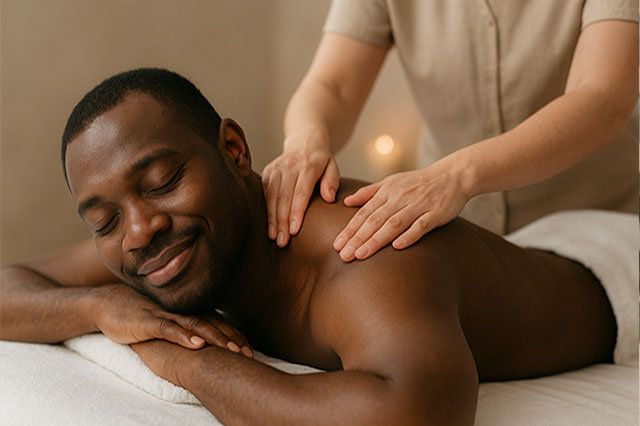
If you love a strong massage or you are tired of “just relaxing” on the table, deep tissue massage is probably what you are looking for. It is a focused, firm-pressure treatment that works into deeper muscle layers and stubborn knots, not just the surface tension. Think of it as the serious version of a spa massage, still soothing, but with a clear goal: relief that lasts beyond the session.
Compared to a regular Swedish or relaxing massage, deep tissue feels slower, heavier, and more precise. Your therapist follows your breath, sinks in with fingers, knuckles, or elbows, and stays longer on tight points in your back, neck, shoulders, or legs. You may feel a “good ache” during the work and a light soreness after, similar to how you feel after a strong workout.
This guide is for people who enjoy deep pressure or who are dealing with nagging pain, stiff shoulders from long hours at a desk, sports strain, or stress that never seems to let go. If you want better mobility, fewer headaches, and a calmer nervous system, deep tissue can be a strong support when it is done well.
You will learn what really happens in a deep tissue session, how it differs from a typical relaxation massage, and who it suits best. We will walk through key benefits for pain relief, posture, and stress, plus simple safety tips so you know when to go lighter or skip this style.
Since you are likely looking for treatment in Nairobi, we will also talk about how sessions work in a local spa setting, including Kilimani and nearby areas like Riara Road and Ngong Road. By the end, you will know how to choose the right therapist, how to speak up about pressure, and how to get the most from every deep tissue massage you book.
What Is Deep Tissue Massage and How Is It Different From a Regular Massage?
Deep tissue massage is for people who want real change in their body, not just a nap on the table. It still feels relaxing, but the focus is on deeper layers of muscle and fascia (the thin tissue that wraps around muscles) to ease pain, improve movement, and release long-term tightness.
Compared to a Swedish or relaxation massage, deep tissue uses slower, heavier, more targeted pressure. A Swedish massage is great when you want to unwind, reduce stress, and feel pampered. Deep tissue massage is better when your back always feels stuck, your neck is stiff every morning, or your legs feel heavy after training.
Therapists use tools like:
- Fingers and thumbs for precise work on knots
- Knuckles and forearms for broad, firm pressure
- Elbows for deep, focused work on thick muscle groups like the back or thighs
People often describe it as a “good hurt”. You feel strong pressure and sometimes an intense stretch, but it should stay within your comfort level. It should never feel sharp, burning, or unbearable. If it does, that is a sign to speak up and ask your therapist to go lighter.
A simple way to picture the difference:
- Swedish / regular massage: Like gently ironing a shirt. It smooths, calms, and relaxes the surface.
- Deep tissue massage: Like slowly working out a hard knot in a rope. It takes time, steady pressure, and focus to change what is happening underneath.
In a Nairobi spa setting, deep tissue massage fits office workers with stiff necks from traffic and laptops, athletes with tight calves and hamstrings, and anyone who simply prefers strong, clear pressure. It is not only for people in serious pain. Many clients at places like Nuru VIP Massage choose deep tissue simply because they feel lighter, looser, and more aligned after a firm, focused session.
Key goals of a deep tissue massage
Deep tissue massage has very clear goals. It is not random hard pressure. Each stroke is meant to help your body move and feel better in daily life.
Some of the main aims are:
- Ease chronic muscle pain
If your lower back, shoulders, or hips always feel sore or “stuck,” deep tissue can target those problem spots. For example, someone who spends all day driving around Nairobi might feel a band of pain across the shoulders. Deep, slow work in that area helps muscles relax and reduces that constant ache. - Reduce tightness and stiffness
Tight neck, locked jaw, or heavy legs after workouts are common problems. By sinking into tight bands of muscle and holding pressure, your therapist helps those areas soften. You walk out feeling less like a block of concrete and more like a person again. - Improve posture
Long hours on a laptop or phone often lead to rounded shoulders and a forward head. Deep tissue massage works into the chest, upper back, and neck to release the tension that pulls your body out of alignment. Over time, this makes it easier to sit and stand tall without forcing it. - Support old injuries and scar tissue
If you hurt your ankle, knee, or back years ago and it never felt “normal” again, deep tissue work around the area can help. The pressure and slow strokes help soften scar tissue and sticky areas in the fascia, which can improve movement and reduce that nagging, dull pain. - Help active lifestyles and sports recovery
Runners, gym lovers, and weekend football players often use deep tissue massage to keep muscles healthy. Firm work on calves, quads, hamstrings, and glutes helps reduce soreness and keeps you training with less risk of strain.
Deep tissue massage also works well for people who simply enjoy firm, grounded pressure and want deeper relief than a regular relaxation massage can offer. You do not need to be in extreme pain to benefit from it.
How deep tissue massage actually works in your body
Deep tissue massage works by using slow, firm pressure to reach deeper layers of muscle and fascia. Instead of fast rubbing on the surface, your therapist sinks in, waits, and follows your breath until the tissue starts to release.
Here is what is happening inside your body in simple terms:
- Releasing knots and adhesions
Knots feel like small, tight bumps in your muscles. Adhesions are little stuck areas where muscle and fascia do not slide smoothly. When the therapist applies steady pressure, those tight spots slowly soften, like pressing on a lump of dough until it spreads out. - Improving blood flow
The pressure acts like a pump. It gently squeezes the area, then when the therapist moves on, fresh blood flows in. That brings more oxygen and nutrients to tired muscles and helps clear out waste products that make you feel sore and heavy. - Softening fascia and scar tissue
Fascia is a thin layer of tissue wrapped around your muscles. When it gets tight, you feel stiff even if the muscle itself is not very strong or bulky. Slow, gliding and stretching strokes help this tissue loosen. With repeated sessions, stubborn scar tissue around old injuries can become more flexible. - Resetting muscle tension
Your nervous system constantly tells muscles how tight to stay. Strong, steady touch can “teach” the body that it is safe to relax. After a session, your brain reduces the signal to hold tension, so your shoulders drop, your jaw softens, and your back feels freer.
Deep tissue massage is not usually a one-time miracle fix. Chronic pain and long-term stiffness often need:
- Several sessions to build results
- Good self-care between massages, like stretching, drinking enough water, and moving your body regularly
- Small lifestyle changes, such as better desk setup or better posture while driving
When you combine regular deep tissue massage with smart daily habits, your body slowly shifts out of constant tension and into a more relaxed, pain-free state.
Top Benefits of Deep Tissue Massage for Pain, Stress, and Performance
Deep tissue massage is not just “hard pressure”. When it is done well, it can change how you move, sleep, and handle daily stress in a busy city like Nairobi. Here is how it helps with pain, posture, stress relief, and performance in a real, practical way.
Relief for chronic neck, back, and shoulder pain
If you spend long hours at a laptop, scroll on your phone in traffic, or carry stress in your shoulders, you probably know the feeling of a tight upper back that never relaxes. Deep tissue massage targets those exact problem areas.
A skilled therapist works slowly along the:
- Neck and base of the skull, where tension often triggers headaches
- Upper back and shoulder blades, where “computer shoulders” build up
- Lower back, where long sitting and poor chairs cause stiffness
By sinking into tight bands of muscle, holding pressure, and following your breath, the therapist helps:
- Release chronic knots in the neck and shoulders
- Ease tension headaches and heavy, “tired” eyes
- Reduce lower back stiffness so standing up from a chair feels easier
For people who sit in Nairobi traffic or at a desk in Kilimani all week, this kind of focused work along the spine and shoulders can support long-term comfort, not just a few hours of relief.
Results last longer when you:
- Add simple stretching for the hips, chest, and neck
- Adjust your posture at your workstation or in the car
- Keep up with regular sessions instead of waiting for pain to get severe
If you want more detail on how a therapist can work on your specific pain patterns, it helps to check a focused service page like the Nuru VIP Massage deep tissue massage or pain relief options before you book.
Better mobility, posture, and body awareness
Tight hips, stiff thighs, and a locked chest do not just feel uncomfortable, they change how you walk, stand, and even breathe. Deep tissue massage frees up those key areas so your body can stack itself in a healthier way.
By loosening your:
- Hip flexors and glutes, your stride becomes smoother and less “stompy”
- Hamstrings and calves, your knees and ankles move with less pull
- Chest and upper back, your shoulders can relax instead of rounding forward
When these muscles soften, a few things start to happen:
- Posture improves because your body is not fighting against tight tissue
- Exercise feels easier, since muscles move through a fuller range
- Small daily strains drop, such as tweaking your back when you lift shopping from the car
Many clients say they feel “taller” or “lighter” after a few sessions. That feeling is your nervous system and muscles working together again instead of pulling in different directions. You become more aware of how you sit, stand, and move, so you catch slouching or awkward positions earlier.
Deep relaxation and stress release for busy lifestyles
A lot of people think deep tissue massage is only painful. In reality, once your body starts to trust the pressure, it can be more relaxing than a light massage.
Life in Nairobi can stack stress on you from all sides: traffic on Ngong Road, late meetings, school runs, business pressures. Your body responds by keeping muscles on “high alert”, especially in the neck, jaw, and back. Deep, slow pressure helps flip the switch from fight-or-flight into a calmer state.
During a good deep tissue session:
- Breathing slows and deepens
- Your mind quiets as your body lets go of held tension
- The nervous system calms, which can support better sleep and fewer 3 a.m. wake-ups
A light massage mostly soothes the surface. It feels nice, like a gentle breeze. Deep tissue feels more like a slow, heavy blanket; it reaches deeper layers and signals your brain that it is safe to relax at a more complete level.
Many clients report that after a strong but mindful session, they sleep more deeply, wake up less stiff, and feel less reactive to daily stress.
Support for athletes, gym lovers, and active people
If you run at Arboretum, lift weights, hike the Ngong Hills, or play weekend football, your muscles take a beating. Deep tissue massage works as a reset button for your body.
Strong, focused work on:
- Hamstrings and calves helps with tightness from running or squats
- Quads and glutes supports knee and hip comfort
- Hip flexors and lower back reduces the “compressed” feeling after many workouts
The benefits add up when you train often:
- Less muscle soreness after hard gym sessions or long runs
- Better joint mobility, so you can squat, lunge, and sprint with control
- Lower risk of strains, pulls, and overuse injuries
Many active clients in Nairobi use regular deep tissue sessions as part of their recovery routine, the same way they plan rest days or stretching. It keeps their muscles flexible, so they can push hard without breaking down.
If you are focused on sports or long hikes, it can help to pair your session with a more targeted option, such as a sports-focused treatment or a trekkers’ foot massage, often listed on spa sites like Nuru VIP Massage under sports recovery services. This kind of support keeps your body ready for the next workout instead of always playing catch-up.
Is Deep Tissue Massage Right for You? Who Should Get It and Who Should Avoid It
Deep tissue massage can feel life-changing when it matches your body and health. When it does not, it can feel too intense or even risky. This section will help you decide where you fit so you can book with confidence and stay safe.
Great candidates for deep tissue massage
Deep tissue massage suits people who feel tight most of the time and want more than soft, surface-level strokes.
You are likely a good fit if you recognize yourself in any of these:
- Long-term muscle tightness in your neck, shoulders, or back that keeps coming back, especially after a long day in Nairobi traffic or at the office.
- Old sports injuries that healed but still feel “not quite right”, like a stiff ankle, knee, or shoulder.
- Stiff neck from computer work, phones, or driving, with that heavy feeling between the shoulder blades.
- Lower back pain from sitting or driving, where your back feels locked when you stand up.
- Very tight legs and hips from running, hiking, squats, or heavy gym work.
People who enjoy firm pressure usually love deep tissue massage. If you often ask other therapists to “go harder” or you use hard foam rollers at home, your body may respond very well to this style.
Deep tissue is also a smart choice if you:
- Want clear results, like better range of motion, easier walking, or fewer headaches.
- Prefer feeling “worked on” rather than lightly pampered.
- Are happy with a bit of “good pain” during the session in exchange for real relief afterward.
For many clients, regular sessions give the best results. A common rhythm is:
- Every 2 weeks if you are in pain, training hard, or very tight.
- Every 3 to 4 weeks for maintenance once your body feels better and more balanced.
Your budget and your body both matter. It is better to book a strong, focused session every few weeks than to squeeze in too many cheap, rushed treatments that do not actually help.
When to choose a lighter or different kind of massage instead
Deep tissue massage is not the only way to relax or reduce tension. Sometimes a lighter style is simply a better match.
You might prefer Swedish, aromatherapy, or gentle hot stone massage if:
- You mostly want to relax, switch off your mind, and sleep on the table.
- You feel nervous about strong pressure or you are totally new to massage.
- You know you are very sensitive to touch or bruise easily.
- You are feeling run-down, emotional, or exhausted, and want comfort more than intensity.
A lighter massage focuses on smooth, flowing strokes and calming the nervous system. Aromatherapy adds essential oils, which can support mood, sleep, and stress. Hot stones bring warmth that slowly softens tight muscles without heavy pressure.
At Nuru VIP Massage in Kilimani, you can choose from several styles. If you are unsure where to start, check a general overview page like the massage and spa services menu and then talk to your therapist. A quick chat before your session helps them guide you to something that matches how you feel that day.
You do not have to commit to strong pressure forever. Many people switch between deep tissue and lighter styles, depending on stress, training load, and energy levels.
Health conditions that need extra care or a doctor’s approval
Some health issues make strong pressure risky. In these cases, deep tissue massage might need major adjustments, a doctor’s note, or should be avoided completely.
Situations that need extra care include:
- Recent surgery or fractures
Avoid deep work near the area until your doctor or surgeon says healing is complete. - Open wounds, bruises, or active infections
The therapist should not work directly over these spots. - Blood clots or history of DVT
Deep pressure can be dangerous around a clot. Always get medical clearance first. - Severe osteoporosis or very fragile bones
Strong pressure can cause pain or even fractures. Gentle techniques are safer. - Some cancers or cancer treatments
Tissues can be delicate and clotting can change, so your oncologist should approve any deeper work. - Uncontrolled high blood pressure or serious heart problems
Extra circulation from massage may not be safe without your doctor’s guidance. - Bleeding disorders or blood-thinning medication
You may bruise easily, so intensity and areas treated must be adjusted. - Pregnancy
Deep pressure over the abdomen and certain points is not safe. Choose a pregnancy-safe or gentle massage with a trained therapist instead.
Always share your full health history with your therapist in private before the session. Tell them about surgeries, medications, current treatments, and anything that worries you. A good therapist will never be offended by questions or by your caution.
If you live with a serious condition or you are unsure if deep tissue massage is safe for you, speak to your doctor first. Clear guidance from your medical provider plus honest communication with your therapist is the best way to stay safe and still enjoy the benefits of touch.
What To Expect Before, During, and After a Deep Tissue Massage Session
Walking into a spa for a deep tissue massage for the first time can feel a bit unknown. When you know what to expect before, during, and after, your nerves settle and you can actually enjoy the experience. Think of this as a short guided tour of a typical visit to a Nairobi spa in Kilimani, from the moment you book to the way you feel a day later.
You will see that a few simple habits, clear communication, and basic aftercare make a big difference in how much relief you get from each session.
How to prepare for your appointment
Good preparation starts a few hours before your deep tissue massage, not when you lie on the table.
Here are simple steps that help your body respond better to firm work:
- Drink water in the hours before your session so your tissues are well hydrated. Sip steadily instead of chugging a huge bottle at once.
- Avoid a heavy meal right before your appointment. Eating a big plate of nyama choma and ugali 30 minutes before your session can make you feel bloated on the table. Light snacks are fine.
- Skip alcohol before your massage. Alcohol can thin your blood, dull your pain signals, and sometimes leave you dizzy when you get up.
- Wear loose, comfortable clothing to the spa. Think soft trousers, a dress, or joggers that are easy to change in and out of.
- Arrive 10 to 15 minutes early. This gives you time to breathe, use the washroom, and settle instead of rushing in from Nairobi traffic.
Before the session, most spas will ask you to fill out a health form. Take this seriously. Mention:
- Old or recent injuries
- Surgeries
- Blood pressure problems
- Pregnancy
- Medications like blood thinners
Being honest protects you and helps the therapist plan safe, effective work.
It also helps to think about your goals before you arrive. Do you want:
- Relief from neck or back pain?
- Help with tight legs from the gym?
- Deep stress release and better sleep?
When you know your goal, your therapist can focus the session instead of guessing. If you are still choosing where to book, browse therapist profiles or service pages first. For example, you can look at a detailed service page like the Nuru VIP Massage deep tissue massage in Nairobi to see what is included, how long sessions last, and which therapists suit your needs.
What happens during a deep tissue massage at the spa
Once you arrive and check in, the receptionist will confirm your booking and probably offer you a seat for a short moment. Your therapist will then come to meet you, greet you by name, and walk you to the treatment room.
Inside the room, you will usually:
- Have a short chat about your main pain areas, any injuries, and what kind of pressure you like.
- Hear a simple explanation of how the session will go, for example, starting on your back, then legs, then shoulders.
Privacy is taken seriously. The therapist will:
- Step out of the room while you undress to your comfort level.
- Provide a clean sheet or towel and show you where to hang or place your clothes.
- Knock before they come back in.
You stay covered the whole time except for the area they are working on. This is called draping and it protects your modesty. If you are shy, you can keep underwear on and tell the therapist what you are comfortable with. A good therapist respects that.
The session usually flows like this:
- The therapist uses lighter, warming strokes at first to help your muscles relax.
- Once your body softens, they start slower, deeper work on tight areas like your back, neck, or hips.
- They may use thumbs, knuckles, or elbows for focused pressure on stubborn knots.
- Throughout the treatment, they will check in about pressure and comfort.
You should always feel free to speak up. Say:
- “Can you go a bit deeper there?”
- “That spot feels too intense, please go lighter.”
- “My neck is sensitive, please be gentle.”
Deep tissue massage often feels like a strong, focused pressure or a “good hurt” that you can breathe through. Sharp, burning, or electric pain is not okay. If you feel that, tell your therapist straight away so they can adjust.
Normal sensations and how you might feel right after
When the session ends, your therapist will leave the room again so you can slowly get up and get dressed. It helps to sit on the edge of the bed for a moment before you stand, especially if you feel very relaxed.
Right after a deep tissue massage, people often report:
- Feeling lighter, as if a weight has lifted from their shoulders
- A warm, heavy calm, almost like a pleasant “massage hangover”
- Sleepiness or a strong urge to rest
- A clearer head and deeper, easier breathing
You might also notice mild soreness in some muscles. This is common if:
- It was your first deep tissue session
- Your muscles were very tight
- The therapist worked on long-standing problem areas
This soreness should feel like what you get after a solid workout, not injury pain. It usually fades within 24 to 48 hours.
To support your body right after:
- Drink water before you leave and when you get home.
- Give yourself some quiet time instead of rushing to a high-intensity gym class.
- Avoid heavy lifting or very hard workouts right after the session, especially if you feel tender.
Most people sleep very deeply the night after a good deep tissue massage. If you feel a bit emotional, that can also be normal, since your body has released a lot of stored tension.
Aftercare tips to get the most from each deep tissue session
What you do in the hours and days after your massage can extend the relief you feel. Think of it as helping your body “lock in” the benefits.
Simple aftercare habits that work well:
- Drink extra water for the rest of the day. This helps circulation and supports your muscles as they recover.
- Do gentle stretching for areas that were worked, such as neck rolls, shoulder circles, or light hamstring stretches. Move slowly and avoid forcing anything.
- Take a warm shower or bath later on. Warmth relaxes your muscles further and can reduce stiffness.
- Try light walking instead of long sitting. A short walk around your estate or neighborhood keeps blood moving and prevents your body from tightening up again.
- Listen to your body. If you feel tired, rest. If you feel energized, keep movement light and smooth, not explosive.
Some people find ice or heat helpful on sore spots. Ice can calm sharp tenderness, while heat can soften stiff areas. Always follow your therapist’s advice here, especially if you have circulation issues or injuries.
It also helps to keep simple notes after your session. You can jot down:
- Where you felt the most change
- Any areas that felt too sore or too light
- How you slept that night
- How your body felt 1 or 2 days later
Bring this feedback to your next appointment. It gives your therapist a clear map of what worked and what needs adjusting. Over a few sessions, you and your therapist build a plan that fits your body, your pain patterns, and your lifestyle in Nairobi, so each deep tissue massage gives you more steady, reliable relief.
Deep Tissue Massage Techniques Explained in Simple Terms
When you book a deep tissue massage in Nairobi, it is easy to feel like the therapist is “just pressing hard.” In reality, there is a clear method behind every slow stroke, pause, and deep breath they ask you to take. Once you understand the main techniques, the session feels less mysterious and you can give better feedback, which means better results for your body.
Slow, firm pressure and muscle “stripping”
The most common move in deep tissue massage is slow, firm pressure along the length of a muscle, sometimes called muscle stripping. Imagine your muscle is a thick rope. The therapist gently “combs” along that rope, from one end to the other, to smooth out the bumps and tight spots.
To do this, the therapist might use:
- The forearm for broad, heavy pressure along the back or thighs
- The thumb for a narrow path along the neck or between the shoulder blades
- The elbow for very dense areas, like deep glutes or thick back muscles
It feels like a deep glide that moves in one direction, very slowly. At first, the muscle might feel guarded or even slightly tender. As the stroke continues, you usually feel a warm release, like the muscle finally agreeing to soften.
This technique is powerful for:
- Tight hamstrings that pull when you bend forward
- Tired calves from running or standing all day
- Grippy lower back muscles that feel locked when you sit or drive
- Heavy shoulders and upper back from laptop work
The key is the pace. The slower the stroke, the more chance your body has to relax instead of fighting the pressure.
Cross-fiber friction and working on muscle knots
Sometimes the therapist does not follow the length of the muscle. Instead, they move across it in short, firm strokes. This is called cross-fiber friction.
Picture wood grain on a table. Most of the time you wipe along the grain. With cross-fiber work, it is like gently rubbing across the grain to loosen a sticky patch. On your body, this helps break up small adhesions so muscle layers can slide over each other again.
You will usually feel:
- A small, focused movement under the therapist’s finger or thumb
- A firm, back-and-forth rubbing on one tight band or knot
- A brief spike of intensity that settles as the area loosens
This can feel a bit “spicy” during the stroke, especially on old knots in the shoulders or around the shoulder blades. The goal is not to crush your muscles. The aim is to free stuck spots so you can move with less pulling and less pain.
After a few passes, most people feel:
- Less sharpness in the knot
- More comfort when turning the neck or lifting the arm
- A spreading warmth instead of a hard, pinched feeling
Good therapists watch your breathing and body language and will ease off if your body tenses up.
Trigger point work and myofascial release
Some pain comes from tiny, super-tender spots called trigger points. They can hurt where they are, or they can send pain somewhere else. A small knot in your neck, for example, might send aching into your shoulder or even into your head.
Trigger point work feels like:
- The therapist finds an exact sore point.
- They apply steady, firm pressure with a thumb, finger, or elbow.
- You feel a strong, clear sensation that may “radiate” a little.
- You breathe slowly while they hold it for a short time.
As they hold, the spot often shifts from sharp or “pokey” to dull and then to a softer, melting feeling. When that happens, you know the point is letting go.
Along with trigger points, deep tissue massage often includes myofascial release. Fascia is a thin, stretchy web that wraps around your muscles. When it is tight, you feel stiff even if your muscles are not that strong.
Myofascial work feels:
- Slower than regular massage
- Gentle but firm and steady, with very little oil
- Almost like your skin and the layer under it are being softly stretched or held
Think of fascia like cling film wrapped too tight around food. The therapist uses slow, patient touch to lift and stretch that “wrap” so everything underneath can move more freely. This is great for stiff necks, tight chests from poor posture, and hips that feel locked.
How therapists adjust pressure and technique for your body
Deep tissue massage is not one fixed level of “as hard as possible.” A skilled therapist constantly adjusts the pressure, angle, and speed based on your body and your feedback.
They can change:
- Tools: thumbs for detail, knuckles for small areas, forearms for broad strokes, elbows for deep work
- Pressure: light to warm up, medium for most of the session, deeper only where your body can handle it
- Speed: slower for deep release, slightly faster for general flow and relaxation
Your body type also matters. A slim, sensitive person in Kilimani will not receive the same pressure as a heavy lifter from the gym on Ngong Road. Old injuries, stress levels, and pain tolerance all shape how the therapist works.
The best way to get what you need is to talk during the session. Simple phrases help, such as:
- “You can go a bit deeper here.”
- “That feels perfect, keep that level.”
- “That spot is too much, please go lighter.”
This lets the therapist tune the session to you, whether you want intense, problem-solving work or a firm but still relaxing deep tissue massage. When you and your therapist work together, each technique feels safer, more effective, and more satisfying.
How To Make Deep Tissue Massage Part of Your Self-Care Routine
A single deep tissue massage can feel amazing, but real change comes when you treat it like a routine, not a rare treat. With a simple plan, you can go from “emergency” pain visits to steady, long-term relief that fits your life in Nairobi.
How often should you get a deep tissue massage?
Your body, budget, and schedule all matter, so think in phases instead of one fixed rule.
For strong pain or very tight muscles:
- Start with weekly or every two weeks for a short period, about 3 to 6 sessions.
- Focus on your worst areas, like the lower back, neck, or tight legs from driving and desk work.
- Once pain eases and movement improves, stretch out appointments to every 3 to 4 weeks.
For general wellness and stress relief:
- Many people feel great with one session a month.
- Monthly deep tissue massage helps prevent tension from building up from traffic, work, and long commutes.
- If you train hard at the gym or run often, you may prefer every 2 to 3 weeks.
Use these as starting points, not strict rules. Notice how long your body stays comfortable after a session. If relief fades after two weeks, shorten the gap. If you still feel loose and relaxed at week five, you can space visits out more.
Talk openly with your therapist about:
- Your pain level and main problem areas
- How long relief lasts after each session
- What you can realistically afford and fit into your calendar
Together, you can build a custom plan that supports your body without stretching your wallet.
Combining deep tissue with other spa and wellness services
Deep tissue massage does the heavy lifting for pain and stubborn tightness. You can then pair it with gentler treatments that calm your nervous system and leave you floating out of the spa.
Smart combinations include:
- Deep tissue + aromatherapy: First, focused work on your neck, shoulders, or back, then relaxing oil blends to settle your mind.
- Deep tissue + hot stone: Firm pressure to unlock tight muscles, followed by warm stones that melt remaining tension.
- Deep tissue + herbal or foot massage: Strong work on the main issue, then a soothing herbal compress or trekkers’ foot massage to ground you.
Think of deep tissue as the “main course” and softer treatments as dessert. For example, you might book a 60-minute deep tissue session to tackle your back, then add 30 minutes of aromatherapy or foot work to finish on a calm, sleepy note.
If you want ideas that fit your budget, check combination options on the Nuru VIP Massage massage and spa services menu. Packages often cost less than booking everything separately and make it easier to stick to a regular routine.
Simple daily habits that support your massage results
What you do between sessions matters just as much as what happens on the table. A few easy habits can keep your muscles happier for longer and reduce those “urgent” pain visits.
Try adding these to your day:
- Drink enough water: Keep a bottle at your desk or in the car. Hydrated muscles recover better from deep tissue massage.
- Take walking breaks: Stand up every 45 to 60 minutes, walk to the kitchen, or lap your office. Short walks help undo long sitting.
- Stretch tight areas: Gently stretch your chest, hip flexors, and hamstrings after work or before bed. Think 5 minutes, not a full workout.
- Fix your desk posture: Keep the screen at eye level, feet flat, and shoulders relaxed. If you work in Kilimani offices, even a small setup change can reduce neck and back strain.
- Warm up before workouts: Do light movements, like leg swings or arm circles, before heavy lifting or runs, especially if you train after a full day in Nairobi traffic.
These steps are small, but they stack up. Combined with regular deep tissue massage, they help your body stay open and relaxed so you spend less time in crisis mode and more time feeling comfortable in your own skin.
Conclusion
Deep tissue massage is strong, focused work that helps your body reset. It reaches deeper layers of muscle and fascia, eases long-term tightness, and gives real support for pain, posture, and stress. If your back, neck, or legs feel stuck most days, this style can be a powerful part of your self-care, not just an occasional treat.
The key is that pressure should always feel safe. A good session might feel intense, but you should still be able to breathe through it and relax into the touch. Sharp or burning pain is a sign to speak up. When you tell your therapist what you feel, they can adjust and give you the results you want without overdoing it.
Used regularly, deep tissue massage pairs well with simple daily habits like stretching, better posture, and light movement. Together, they help you move more freely, sleep better, and handle stress with less strain on your body. Over time, you are not just chasing pain, you are maintaining a healthier, more comfortable baseline.
If your body has been asking for help, listen to it. Consider booking a deep tissue massage in a calm, professional Kilimani spa setting, where you can talk openly about your goals and let a trained therapist do the heavy lifting for your muscles.
Give yourself permission to feel better, move better, and enjoy your days with less tension and more ease. Your body works hard for you; it deserves that level of care.